
Contagion – Abstract Portrait Art
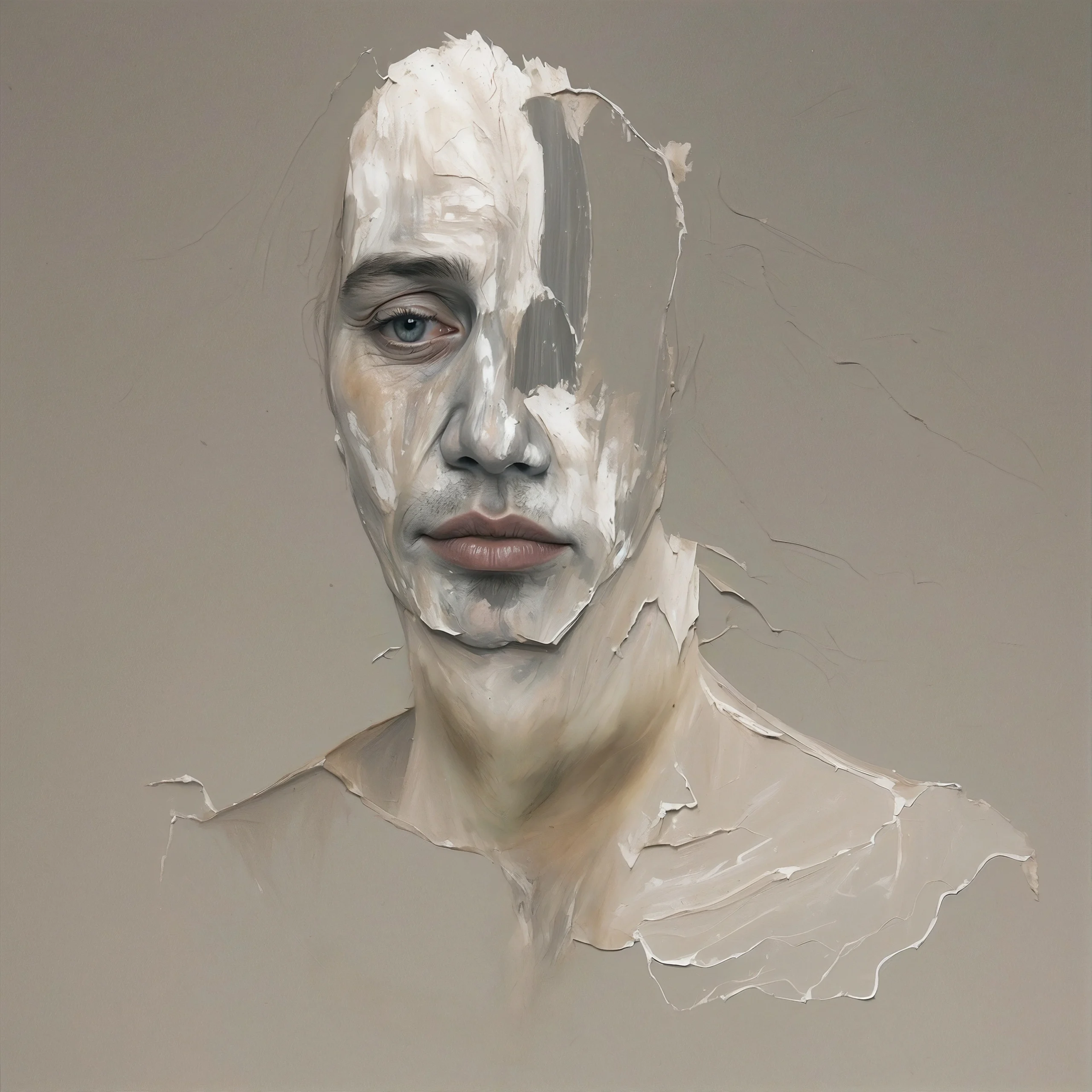
Contagion explores the relationship between identity, concealment and deterioration through a contemporary portrait in which the human face appears to be gradually overtaken by its own surface.
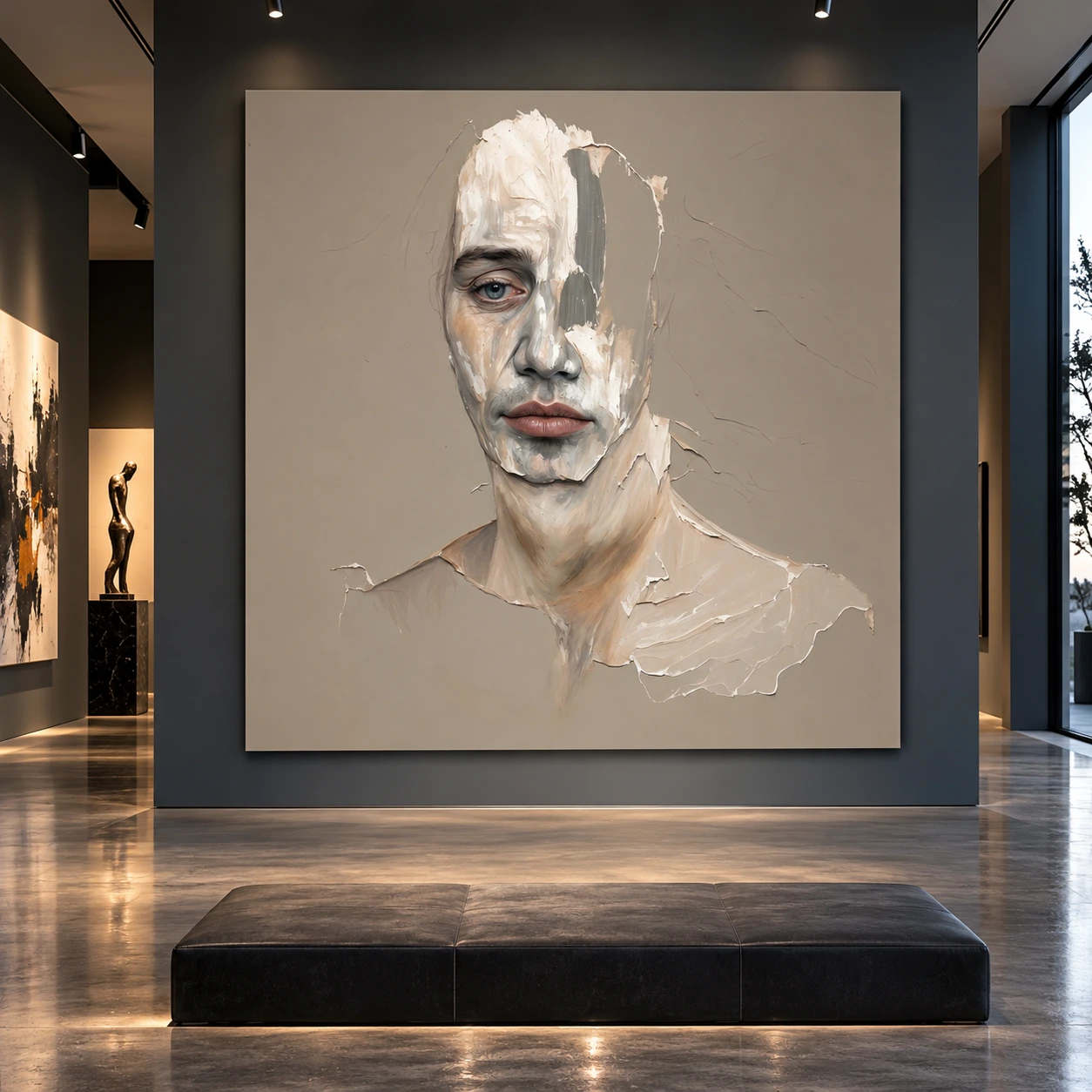
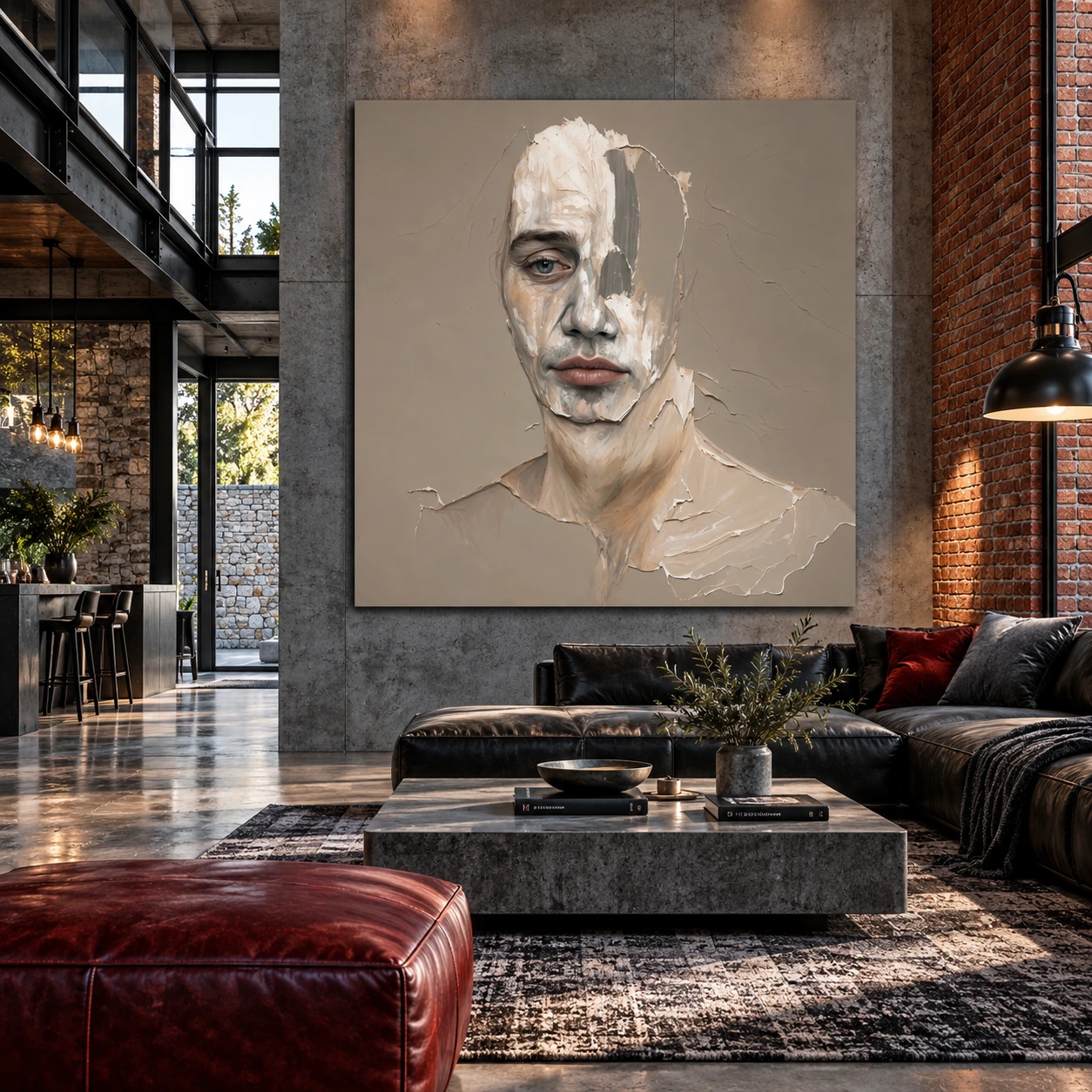
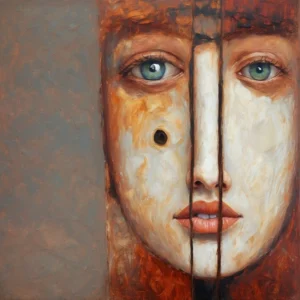
A male figure emerges from a muted taupe background, his features rendered with considerable realism on one side while the other appears obscured beneath fractured layers of pale paint. The contrast is immediate: a clearly defined blue-grey eye establishes direct contact with the viewer, while irregular white and grey textures interrupt the remaining facial structure.
Unlike traditional portraiture, where the surface serves primarily to represent the subject, Contagion makes the surface itself an essential part of the composition.
Cracks, raised-looking edges and uneven patches of colour resemble deteriorating plaster or paint separating from an underlying wall. These details give the artwork a weathered, almost architectural quality, as though the portrait has been uncovered rather than deliberately constructed.
What Remains Beneath the Surface
The most compelling aspect of Contagion is the tension between what remains visible and what has disappeared.
The exposed eye becomes the principal focal point, surrounded by carefully modelled skin tones and subtle shadows. Elsewhere, recognisable features are interrupted by pale, fragmented surfaces that appear to conceal or erase sections of the face.
This uneven distribution of detail creates an unsettling visual balance. The portrait remains unmistakably human, yet parts of the figure seem incomplete, suggesting a process of gradual transformation.
The limited colour palette reinforces this effect. Soft taupe, chalk white, warm grey and muted flesh tones prevent colour from distracting from the relationship between the face and its deteriorating appearance.
Fine cracks extend beyond the figure into the surrounding background, further blurring the distinction between the subject and the surface on which it exists.
Identity, Exposure and Transformation
The title Contagion introduces the possibility of something spreading beyond its original boundaries.
Within the artwork, this idea can be interpreted through the fractured white layers that appear to advance across the figure, gradually obscuring recognisable human features.
The portrait might suggest vulnerability, the erosion of identity or the way external influences can alter how an individual is perceived. Equally, the exposed areas could represent something being revealed beneath an established appearance.
TESOLEE leaves these interpretations open, allowing the viewer to decide whether the fragmented surface represents concealment, deterioration or transformation.
As an example of peeling paint portrait art, Contagion brings together the realism of contemporary figurative painting and the visual language of distressed, abstract surfaces.
Its restrained composition demonstrates that an artwork does not require vivid colour or elaborate surroundings to establish a powerful presence. Through subtle tonal variation, surface detail and the direct expression of a single visible eye, Contagion creates an image that remains compelling long after the initial encounter.

Reviews
There are no reviews yet.